
The fact that you’re reading this leads me to believe that you’ve made the empowering choice to stop smoking. Whether you’re just starting this journey or you’ve already made some progress, let’s explore some practical strategies that can help you succeed. Quitting smoking is a significant step toward better health, not just for you but for those around you too. So let’s dive in!
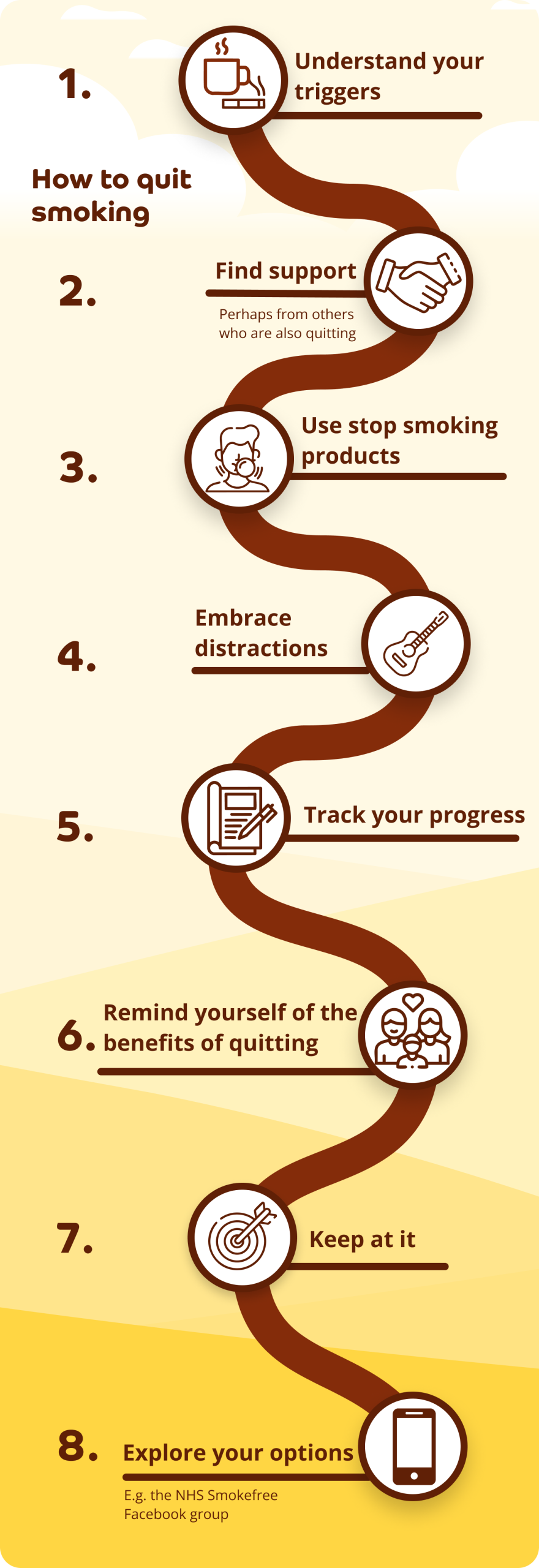
Understand your triggers

First things first: let’s talk about triggers. What are those moments, places, or feelings that make you crave a cigarette?
Perhaps it’s that first cup of coffee in the morning or finishing a meal.
Why not take a moment to write down your personal triggers? Acknowledging them is the first step toward managing them.
Once you know your triggers, you can start to adjust your routine to avoid them. For example, consider switching up where you eat, spending more time with non-smokers, or even avoiding alcohol for a while, as it can often be a strong trigger. Changing your environment can make a world of difference!
Finding support

You don’t have to go through this journey alone. The Evergreen Life community and various support options can be incredibly useful. Have you thought about reaching out to others who are also trying to quit, or sharing your stop smoking journey with a friend or loved one who can both support you and help to hold you accountable? Sharing experiences and advice can provide motivation and encouragement, and you keep each other on track too.
If you’re looking for professional help, the NHS can be a helpful resource. You can find your local NHS Stop Smoking Service here. After all, with the right support, professional help, and stop smoking treatment, you’re three times more likely to quit for good.
Making quitting easier with stop-smoking therapy
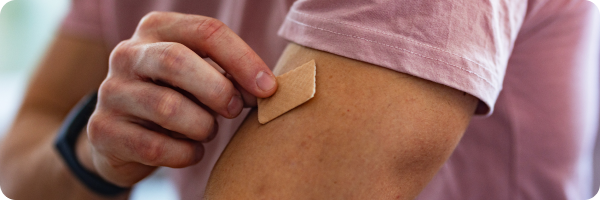
There are many stop-smoking products you can use to help you quit.
Nicotine Replacement Therapy (NRT) is a popular choice. This therapy provides your body with lower doses of nicotine in a safer way. Patches, gum, or lozenges are all available to help ease cravings and withdrawal symptoms. For the best results, consider using a slow-acting NRT together with a fast-acting NRT. A slow-acting nicotine patch provides steady relief throughout the day, while fast-acting options like sprays and gum can help with sudden cravings. These are both available over the counter or as part of GP/community pharmacy or other local NHS Stop Smoking Services.
Another option is nicotine-free medicines, which can help you quit smoking by blocking the effects of nicotine in your brain, making smoking feel less enjoyable. These can be prescribed by your GP or a local Stop Smoking Service.
Vaping and quitting smoking
I understand that the routines and rituals associated with smoking can make quitting challenging. Vaping may be a helpful tool for some people looking to break these habits while simultaneously reducing the health risks associated with traditional cigarette smoking. The hand-to-mouth action of vaping mimics that of smoking, and users often experience similar sensations, such as the throat hit. Research indicates that using a nicotine vape can double your chances of quitting smoking compared to other nicotine replacement products, like patches or gum.
However, it’s crucial to remember that the full benefits of vaping can only be realised if you stop smoking altogether. Vaping should only ever be used as part of a plan to move away from smoking tobacco and eventually towards a nicotine-free life.
While vaping is substantially less harmful than smoking – exposing users to fewer toxins and at lower levels – it’s essential to recognise that it’s not risk-free. In fact, despite research still emerging, it’s already known that vaping can result in inflammation in the airways, and people with asthma report that vapes can trigger their condition. Research is also continuing to better understand vaping’s impact on children and young people. Non-smokers or young people under 18 shouldn’t start vaping, with the government banning the sale or supply of single-use / disposable vapes in June 2025 in a bid to protect children’s health and the environment.
The bottom line is, although current evidence suggests that vaping poses a small fraction of the risks associated with smoking, and the long-term effects of vaping remain largely unknown, results of early studies do show respiratory, neurological, and cardiovascular effects. The healthiest option is to avoid both smoking and vaping, and if you choose to use vaping as a stop smoking tool, aim to eventually quit vaping as well. It’s helpful to discuss your options with a healthcare professional to create a personalised quitting plan that aligns with your health goals.

Combining nicotine-free medicine, like varenicline, with NRTs makes you over five times more likely to quit smoking for good.
Distraction techniques

Now, let’s talk about distractions. When cravings hit, it can help to have a plan in place. What are some activities you enjoy?
- You don’t have to be sporty to benefit from getting active. Even short bursts of activity, like running up and down the stairs a few times, can make nicotine cravings go away. You’d be surprised by how much getting out for a short walk, bike ride or jog can take your mind off them entirely.
- Wrestling with cigarette cravings can be a stressful process. Finding ways to relax, for example with deep breathing, muscle relaxation, yoga, massage or listening to peaceful music can help ease things.
- Keeping your hands busy can work wonders too. Knitting, various types of art, woodwork, and playing an instrument are all ways to keep your hands occupied. As a bonus, you could see it as an exciting opportunity to learn something new or re-engage with an old interest or passion.
Whether it’s exercise, reading, listening to music, or calling a friend, having a list of go-to distractions can help you beat those cravings. When you feel the urge to smoke, reach for something that interests you instead.
Keep track of your progress

A great way to stay motivated is to monitor the money you’re saving by not buying cigarettes. It can be surprising to see just how much you can save. What could you do with that extra cash? Perhaps treat yourself to something special or save for a fun outing.
Also, remember to celebrate your wins—no matter how small! If you’ve been smoke-free for 28 days, that’s fantastic! Did you know that at this point, you’re five times more likely to quit for good than someone who has quit for a shorter time? That’s something to be proud of!
Don’t forget the benefits of being smoke-free

As you go through your stop smoking journey, keep reminding yourself of the benefits of quitting. Many people spot improvements in their breathing and exercise tolerance shortly after stopping. Yes, coughing can be common in the first few weeks as your lungs begin to heal, but it’s a sign that your body is recovering. Imagine how great it’ll feel to breathe easier and have more energy!
Be persistant

It’s important to remember that quitting smoking is often a journey with ups and downs. Most people who successfully stop smoking do so after several attempts. If you find yourself facing setbacks, don’t be discouraged. These are part of the process. The key is to keep trying and to keep your long-term goal in mind.
If you’re struggling to stick to your goals, don’t hesitate to talk to your doctor or another health professional. You can also call the free National Smokefree Helpline at 0300 123 1044 (available in England). Trained, non-judgemental advisers are there to provide you with advice and support from Monday to Friday, 9am to 8pm, and Saturday and Sunday, 11am to 4pm.
Explore your options

If you’re after additional resources, the NHS offers a wealth of information. Why not investigate their insights on creating a personal quit plan here or join the NHS Smokefree Facebook group for a supportive community? You can also download the NHS Quit Smoking app for helpful tips and support.
Moving forward

As I’ve mentioned before, quitting smoking is a journey, and each step you take is a step toward a healthier, smoke-free life. Remember, it’s okay to ask for help and lean on your support network. Reflect on the strategies we discussed and think about what might suit you best. What’s one small change you can make today to bring you closer to your goal of being smoke free?
You’ve got this! Embrace the process, and remember that a smoke-free life is not just an end goal; it’s a new, healthier lifestyle filled with possibilities.
If you haven’t already, why not download the Evergreen Life app to continue exploring healthy lifestyle choices?
- Facebook (n.d.) Smokefree Quit Smoking Support Group. [online] Available here.
- Gov.uk (2023) 95% of ex-smokers see positive changes soon after quitting. [online] Available here.
- Gov.uk (2025) 10-year study to shed light on youth vaping. [online] Available here.
- Gov.uk (2025) Guidance Single-use vapes ban: what businesses need to do. [online] Available here.
- Hamann SL, Kungskulniti N, Charoenca N, et al. (2023) Electronic Cigarette Harms: Aggregate Evidence Shows Damage to Biological Systems. Int. J. Environ Res Public Health. 20(19): 6808. (doi: 10.3390/ijerph20196808).
- Make smoking history (n.d.) Saving money. [online] Available here.
- Mayo Clinic (2025) Quitting smoking: 10 ways to resist tobacco cravings. [online] Available here.
- NHS (2022) NHS stop smoking services help you quit. [online] Available here.
- NHS Better Health (n.d.) Find your local Stop Smoking Service. [online] Available here.
- NHS Better Health (n.d.) Find the best stop-smoking products for you. [online] Available here.
- NHS Better Health (n.d.) Quit Smoking with nicotine-free medicines. [online] Available here.
- NHS Better Health (n.d.) Vaping to quit smoking. [online] Available here.
- NHS Better Health (n.d.) Should I quit smoking cold turkey? [online] Available here.
- NHS Better Health (n.d.) Get a free Personal Quit Plan. [online] Available here.
- NHS Better Health (n.d.) Download the NHS Quit Smoking app. [online] Available here.
- NHS Inform (n.d.) Vaping addiction soon takes hold. [online] Available here.
- Triggle N. (2025) Disposable vape ban begins – but will it have an impact? [online] Available here.