

Over-the-counter (OTC) medicines are widely used in the UK to treat pain, reflux, allergies, colds, diarrhoea, and constipation. As they don’t require a prescription from a doctor or pharmacist, it’s easy to assume they’re always safe.
However, OTC medicines can cause harm if they’re taken too often, at the wrong dose, for too long, or alongside other medicines or health conditions. Yet, you don’t need a medical degree or to spend 7+ years at medical school to understand the risks of common over-the-counter medicines or how to take them safely – we’ve got you covered.
This guide explains:
- what common OTC medicines are used for
- how to take them safely (including dose spacing and maximum doses)
- short-term, long-term, and overuse risks
- common things to avoid taking them with (interactions)
- who needs to take extra caution
Before we dive in, let’s explore what we mean by “interactions”
A medicine interaction happens when:
- one medicine changes the effect of another.
- two medicines together increase the risk of side effects.
- a medication and a food, supplement, or alcoholic drink alter how the medicine works.

It’s not just alcoholic drinks that some medication can interact with. For example, grapefruit juice can interact with the OTC antihistamine loratadine (brand name Clarityn).
These interactions can occur despite:
- each medicine is taken at the right dose.
- the medicines are taken hours apart.
- one of the medicines is “only” over the counter.
To discover more about how different medications interactions work, and the role alcohol and supplements play in those, visit our medication interactions article.
Jump to section:
1. Paracetamol
Used for:
A common painkiller, paracetamol is used for treating aches and fever. Examples of common brands include: Disprol, Hedex and Panadol.
Note: Many supermarkets/pharmacies have their own brands of medication, which are the same drug compound and often cheaper.
Safe dosing:
If you’ve ever found yourself wondering ‘how often can I take paracetamol?’ when trying to ease the pain you’re experiencing, remember that a single tablet is usually 500mg (always check the label), and the NHS advises:
- taking one or two 500mg tablets at a time, up to 4 times in 24 hours.
- sticking to a maximum of 4,000mg (8 × 500mg tablets) in 24 hours.
Although tricky when you’re experiencing pain, be patient, as paracetamol can take up to an hour to work.
What are the risks of not taking paracetamol correctly?
In the short-term, paracetamol is usually well tolerated if taken in the correct amounts and at the right times. It’s even deemed safe to take (when taken correctly) whilst pregnant or breastfeeding, and there’s no evidence that it reduces fertility in men or women. While 1 or 2 extra tablets is unlikely to harm you, an overdose of paracetamol (even accidental) can:
- result in severe liver injury. This is the case if you repeatedly take too higher doses, even without one single large overdose.
- be life-threatening.
Interactions to avoid when taking paracetamol:
Paracetamol is safe to take with most prescription medicines, including antibiotics. It’s also safe to take it with other types of painkillers that don’t contain paracetamol, like ibuprofen, aspirin or codeine. However, avoid:
- taking paracetamol alongside other paracetamol-containing products (cold and flu remedies) as this increases the risk of overdosing. For example, co-codamol contains both codeine and paracetamol, so avoid taking extra paracetamol, when using this.
- mixing paracetamol and alcohol because doing so can cause serious liver damage, if you drink heavily.
- NICE’s (National Institute for Health and Care Excellence) BNF (British National Formulary) lists the various medicines that can be dangerous to take with paracetamol. Severe interactions to avoid include: Bemiparin, Dalteparin, Enoxaparin, Flucloxacillin, Imatinib, Phenindione, Tinzaparin – mainly because of the increased risk of hepatotoxicity (liver damage due to exposure to harmful substances).

If you can’t find the interaction information for the medication you plan to take on the BNF, check with your doctor or specialist before starting any new medication.
- taking it with complementary medicines, herbal remedies or supplements as there isn’t enough evidence available to determine if this is safe or not. This is because supplements and herbal remedies aren’t tested in the same way or to the same extent as pharmacy and prescription medicines, and they’re not usually tested for the effects they have on other medicines.
Tell your doctor or pharmacist is you’re taking other medicines alongside your paracetamol, including warfarin, epilepsy medication, tuberculosis medication, herbal remedies, vitamins or supplements.
Who should avoid taking paracetamol or be extra cautious?
Extra caution needed if you:
- have liver disease – alcohol-induced liver disease raises the risk of hepatotoxicity.
- drink alcohol regularly or heavily – over 14 units per week.
- live with kidney problems.
- have had an allergic reaction or paracetamol or any other medicine – it’s also wise to tell your doctor or pharmacist about this.
- have a low bodyweight or poor nutrition. If you weigh less than 50kg (8 stone), it’s best to check the maximum dose you can safely take with your doctor or pharmacist.
Safety summary
Paracetamol is effective and safe only within strict dose limits. Exceeding them, even by accident, is dangerous.
Contact 111 for advice immediately if you have taken too much paracetamol, even if you feel well. If you need to go to A&E, do not drive. Instead, ask someone to drive you, or call 999 and ask for an ambulance. Remember to bring with you the packet of the paracetamol you took too much of or the leaflet inside it, any remaining paracetamol and any other medicines you take.
2. NSAIDs (with a focus on ibuprofen and aspirin)
Used for:
Like paracetamol, NSAIDs (non-steroidal anti-inflammatory drugs) are often used to treat pain, and lower a high temperature. They’re also used to reduce inflammation. In fact, as NSAIDs can cause some side effects, alternatives are often advised first, including paracetamol, or physiotherapy, if it’s joint pain you’re trying to alleviate.
The common types of NSAIDs include:
- ibuprofen
- aspirin for pain relief (low-dose aspirin isn’t normally considered to be an NSAID)
- naproxen
- etoricoxib
- celecoxib
- diclofenac
- mefenamic acid
- indomethacin
They’re all available under these names or a brand name (for example, ibuprofen for adults brand names include Nurofen, Brufen, Calprofen, Fenbid, Ibugel and Ibuleve, whilst Anadin and Bonjela gel are brand name examples for aspirin used for pain relief). They’re all similarly effective, but you may discover that a certain one might work best for you.
Safe dosing:
Always check the leaflet that comes with the medicine you’ve bought and ask a doctor or pharmacist if you’re not sure how to take your NSAID.
For ibuprofen, how much you take will depend on the type you’re taking and how much ibuprofen it contains (hence why it’s important to follow the leaflet instructions to the letter!)
Generally, for adults taking 200mg tablets or capsules of ibuprofen bought OTC:
- take 1 or 2 tablets or capsules up to 3 times a day if you’re still in pain
- wait at least 4 hours between each dose
- don’t take more than 6 tablets or capsules in 24 hours
Generally, for adults taking 400mg tablets or capsules of ibuprofen bought OTC:
- take 1tablet or capsule up to 3 times a day if you’re still in pain
- wait at least 4 hours between doses
- avoid taking more than 3 tablets or capsules in 24 hours
The dose of aspirin that’s right for you will depend on the type you’re taking, the reason for taking it, and how well it helps ease your symptoms.
When taking aspirin tablets (which usually come in 300mg tablets):
- take 1 or 2 tablets every 4-6 hours
- wait at least 4 hours between each dose
- don’t take more than 12 tablets in 24 hours
The NHS has further information on how to safely take aspirin suppositories (medicine that you gently push into your bottom).
If it’s a short-lived pain like period pain or toothache that you’re trying to treat with aspirin, it may only be necessary for you to take it for 1 or 2 days. If you’ve got your aspirin from a shop or pharmacy but need to take it for more than 3 days, ask your doctor for pharmacy for advice.
What are the risks of not taking NSAIDs correctly?
Fortunately, NSAIDs bought OTC generally carry fewer risks and have fewer side effects than their stronger prescribed counterparts.
Possible risks and side effects of NSAIDs, which tend to be more common if you’re taking higher doses over a longer time period, are elderly or in poor general health, include:
In the short-term:
- indigestion
- diarrhoea
- feeling sick
- stomach aches
- drowsiness
- dizziness
- headaches
- allergic reactions
In the medium-term:
- stomach ulcers, which can cause internal bleeding and anaemia (iron deficiency)
In the long-term or high dose:
- problems with your liver, kidneys or heart and circulation, for example heart failure, heart attacks and strokes
A note about ibuprofen risks and side effects:
As well as the risks listed above, ibuprofen may also include a rash or constipation. According to the NHS, you’re less likely to experience side effects from ibuprofen gel or spray.
Ibuprofen will not usually impact your driving, cycling or machine-operating capabilities, but if you feel dizzy after taking it, wait until the dizziness goes away.
A note about aspirin risks and side effects:
In addition to the side effects previously listed, the NHS explains that more than 1 in 100 people may bleed more easily than normal, so take extra care when doing activities that might cause an injury or cut.
Where indigestion is concerned, take aspirin with food to help prevent it.
Although rare, call 111 or your doctor if:
– you cough up blood or your urine, stools or vomit contain blood.
– your hands and feet swell as this could be a sign of water build-up.
– you experience pain in your hand or feet joints because this could suggest high levels or uric acid in your blood.
– your skin or whites of your eyes yellow, or your urine darkens as this could indicate problems with your liver.
Interactions to avoid when taking NSAIDs
- blood thinners to prevent blood clots, such as low-dose aspirin or warfarin.
- diuretics – medicines sometimes used in the treatment of high blood pressure.
- lithium – a mental health condition medication, used in the treatment of bipolar disorder and severe depression.
- another NSAID.
- methotrexate, which is used to treat rheumatoid arthritis and other inflammatory conditions.
- ciclosporin (or cyclosporine), which is used to treat autoimmune conditions like ulcerative colitis or arthritis.
- selective serotonin reuptake inhibitors (SSRIs), such as citalopram and fluoxetine (brand name example: Prozac).
While it’s typically safe to drink alcohol while taking NSAIDs, excessive alcohol intake may irritate your stomach. Drinking a lot of alcohol when taking ibuprofen can increase the risk of side effects, for example. Our article has eight tips for managing your alcohol intake if you feel you need to do so.
Interactions to avoid when taking ibuprofen specifically:
On top of the above, ibuprofen may not mix well with steroid medicines. Adults can take ibuprofen at the same time as paracetamol if necessary. However, the NHS suggests giving each one a go on their own first to see if they work for you individually.
Head over to the BNF for a more detailed breakdown of which medications interact negatively with ibuprofen, and likewise for aspirin.
Who should avoid taking NSAIDs or be extra cautious?
Whilst most people can take NSAIDs, some people may need to take extra care and check with their doctor or pharmacist beforehand. This is the case for you if you:
- have had a previous allergic reaction to NSAIDs
- are expecting a baby or trying for one
- are breastfeeding
- have asthma (NSAIDs can worsen symptoms in some)
- are aged 65+
- experience any heart, liver, kidney, blood pressure, circulation or bowel issues
- have kidney disease and/or reduced kidney function
- are taking other medication
- have had a stomach ulcer before and / or regularly experience reflux / indigestion
Who should avoid taking ibuprofen or be extra cautious?
Besides those listed above, ibuprofen may not be appropriate for people who have chickenpox, had a stroke or have trouble with blood clotting.
Who should avoid taking aspirin or be extra cautious?
Along with those listed previously, the NHS advises also telling your doctor or pharmacist if you have gout or heavy periods before taking aspirin, as the medication can make it worse and periods heavier for some people.
Do not give any child under 16 OTC medicine that has aspirin in it, unless their doctor prescribes it.
Safety summary:
NSAIDs should be used at the lowest dose for the shortest time possible and avoided entirely by some people.
3. Codeine-containing painkillers
Used for:
An opiate, you can buy low-strength codeine from pharmacies and use it to ease short-term moderate pain when other painkillers, like paracetamol, ibuprofen and aspirin, haven’t been effective
Common misconception: codeine is usually not appropriate or helpful for chronic (persistent or constantly recurring) pain and is rarely effective for most long term pain conditions.
Codeine can also be used to treat chronic, non-infectious diarrhoea, under specialist advice, and only when other interventions have failed. However, it’s best to avoid using codeine to treat diarrhoea that’s infectious or a stomach bug, food poisoning or gastroenteritis as it reduces gut motility (movement), prolonging infection and increasing the risk of complications.
Please see the disclaimer in the yellow box within the loperamide (anti-diarrhoeal) ‘used for’ section below, if you are using codeine to treat diarrhoea.
OTC codeine usually comes mixed with either ibuprofen (brand names include Nurofen Plus) or paracetamol (co-codamol).
Safe dosing:
It goes without saying that you should follow the instructions exactly on the leaflet of the OTC codeine you buy.
Codeine can come in the form of:
- tablets that contain 15mg, 30mg or 60mg of codeine.
- cough syrup that has 15mg of codeine in a 5ml spoonful.
- liquid that contains 25mg of codeine in a 5ml spoonful.
The usual codeine dose is 15mg-60mg, and for pain relief it’s:
- one or two 30mg tablets, every 4 hours (with a maximum of 8 tablets (240mg) in 24 hours), for adults.
- one or two 30mg tablets (or one or two 5ml spoonful of liquid), every 6 hours), for children aged 12-17 years.
- one 15mg tablet every 4 hours, for older people or people living with kidney or liver issues.
The NHS shares what the usual dose for treating diarrhoea or a cough is for different groups of people here.
You may only need to take codeine for a few days. If you need to take OTC codeine for longer, you should speak to your GP or pharmacist, who’ll generally prescribe a different medicine to help you with long-term pain.
If you forget to take a dose, check the information in the leaflet for advice on what to do. Avoid taking two doses at the same time to make up for the one you didn’t remember. If doses often slip your mind, it can be helpful to set an alarm to remind you.
What are the risks of not taking codeine correctly?
The below are common side effects that impact more than 1 in 100 people taking codeine:
In the short-term:
- Feeling or being sick – this should usually wear off after a few days (talk to your doctor or pharmacist about anti-sickness medicine if it doesn’t). Before that though, try taking codeine with or just after a meal or snack. If you’re being sick, small sips of water often may help.
- Constipation – again, speak to your doctor or pharmacist about using a laxative (see below) if your constipation doesn’t go, but your first port of call should be aiming to up your fibre intake with fresh fruit and veg and to try and drink lots of glasses of water or other non-alcoholic drinks each day. If you feel able, it can also help to do some gentle exercise.
- Drowsiness and/or confusion – this sleepy feeling should disappear within a few days as your body adjusts to codeine. Avoid cycling, driving or using machinery or tools whenever your feeling sleepy. Contact your doctor if the drowsiness continues.
- Dizziness and vertigo – standing up gradually or remaining sitting until your codeine-induced dizziness has worn off can help. If you notice you start to feel dizzy, lie down to avoid fainting, then sit until things improve.
- Dry mouth – sugar free gum or sweets can remedy this. Alternatively, your doctor can also provide an artificial saliva substitute to keep you mouth moist.
- Headaches – our articles on headache prevention and headache triggers and how to avoid them may help. The NHS says it’s safe to take codeine alongside paracetamol, ibuprofen or aspirin, which may all help provide headache relief, but overusing these medications can actually worsen headaches. Overuse can include more than twice a week.
These more serious side effects happen to less than 1 in 100 people:
- muscle stiffness
- dizziness and tiredness, which can be the symptoms of low blood pressure
Call 111 or a doctor if you experience the above. If you experience:
– breathing difficulties or short shallow breaths
– or you have a fit or seizure
call 999 or go to A&E immediately.
In very rare cases, serious allergic reactions to codeine can occur. When this happens you need to call 999.
In the long term:
Some people live with conditions that demand long-term pain relief to manage and codeine may be their answer to this. However, your body can become used to codeine if you take it for a long time, meaning you need higher doses to manage your pain overtime. This is known as tolerance. Only lower-strength codeine is available OTC. Some people taking codeine long-term can also become more sensitive to pain. It’s also possible to develop codeine addiction.
For these reasons, if you feel like you’re becoming overly dependent on OTC codeine, it’s best to consult your doctor. They’ll be able to work with you to slowly reduce your dose if you’ve become more sensitive to pain, or to review your treatment to support you to reduce your codeine intake safely to limit withdrawal symptoms.
Interactions to avoid when taking codeine:
Before taking OTC codeine, it’s a sensible idea to tell your doctor if you’re taking medication for any of the following:
- high blood pressure
- to help you stop feeling nauseous or stop being sick
- to support your sleep
- depression
- to treat allergy symptoms
- mental health conditions
- to ease tension or anxiety
- herbal remedies or supplements – a lot of how they interact with other medicines hasn’t been tested in the same way as pharmacy medication
As mentioned above, it’s safe to take codeine with other painkillers like paracetamol, ibuprofen or aspirin. However, some painkillers you can buy OTC contain codeine, such as Solpadeine. If you’re taking prescribed codeine, do not take painkillers that contain codeine. Also avoid taking two lots of codeine-containing painkillers as doing so increases your chances of getting side effects, including developing a codeine addiction.
Mixing alcohol with codeine painkillers
Among the 145 harmful interactions with specific medication, the BNF lists mixing alcohol with codeine as being dangerous because both can badly affect your ability to perform skilled tasks like driving.
In some cases, combining alcohol and codeine can also raise the risk of brain-depressant effects, such as sedation (a state of calm or sleep), unconsciousness, coma, respiratory depression (breathing too slow and shallow) and/or cardiovascular depression (a serious mood disorder that often follows a heart problem).
Who should avoid taking codeine or be extra cautious?
Before taking OTC codeine, let your doctor know if you have:
- a head injury
- a lung problem
- an alcohol addiction
- kidney or liver problems
- ever experienced an allergic reaction to codeine or any other medicine
- gallstones
- an enlarged prostate
- an underactive thyroid gland
- myasthenia gravis (a rare illness that causes muscle weakness)
- you’ve been trying to get pregnant, are already pregnant or are breastfeeding – codeine isn’t generally recommended during pregnancy or breastfeeding.
- symptoms of ulcerative colitis
- issues with your adrenal glands
Always consult your doctor before giving codeine to children aged 12-18 years, especially if everyday painkillers, such as paracetamol and ibuprofen, haven’t worked. Do not give codeine to children under 18 if they have had their tonsils or adenoids removed because of obstructive sleep apnoea (OSA). Both OSA and codeine can cause breathing problems.
Safety summary:
As codeine is an opiate, with a risk of addiction, dependence and overdose, it should be used briefly and cautiously, and not as a long-term pain solution.
How to take pain relief medicines safely
When using OTC pain relief medicines for an acute (severe, sudden and short-term) painful condition (e.g., musculoskeletal strain, dental pain, viral illness), a single dose may not maintain enough relief because most drugs have limited duration of action. This means that they only stay effective in your body for a short time before being metabolised or released from the body as a waste.
Taking OTC pain relief medication for a short time, at regular, time-scheduled intervals can provide steadier pain control and reduce pain sensitivity.
Top tips
- Take pain relief medication at fixed intervals, not just when the pain is at its worst. This maintains therapeutic blood levels, where the concentration of medication within your bloodstream is high enough to be effective in treating the intended condition but low enough that it won’t cause toxicity.
- Use the lowest effective dose for the shortest necessary length of time (usually 24–72 hours for minor acute pain).
- Follow product dosing instructions strictly and do not go over maximum daily doses.
- Combine different classes if appropriate (e.g., paracetamol plus ibuprofen) because they act in different ways and can provide additive relief. Additive relief is when the medications’ efficacy is improved while keeping doses of the individual medicines low, which can reduce side effects and toxicity.
- Take pain relief medication with food when advised (e.g., NSAIDs – please see above) to reduce gastric irritation.
- Stop once the pain is controlled rather than continuing routinely.
4. Omeprazole (a type of PPI)
Used for:
A type of medicine called a proton pump inhibitor (PPI), omeprazole is used in the treatment of heartburn, stomach ulcers, gastro-oesophageal reflux disease (GORD), and the stomach infection known as Helicobacter pylori (together with antibiotics). It does this by reducing your stomach acid. Examples of omeprazole brand names include Losec, Losec MUPS, and Pyrocalm. Omeprazole is one of the most commonly prescribed PPIs and is also available OTC.
Safe dosing:
How much omeprazole you need to take and for how long will depend on the type you’re taking and why you’re taking it. It’s usually taken once or twice a day, with some people needing to take it just for a few days, and others depending on it for much longer. A typical dose accessed OTC outside of medical care is 10-20mg once daily.
Always check the leaflet that comes with the omeprazole you bought, and ask your a pharmacist or doctor if you’re unsure how to take it or experience issues when taking it.
Do not take omeprazole for longer than two weeks if you bought it OTC without a prescription. See your GP for a review if your symptoms do not improve. Call 111 if you or your child has taken more omeprazole than it says on the leaflet, as too much can sometimes be harmful.
What are the risks of not taking omeprazole correctly?
In the short-term:
Common omeprazole side effects can include:
- constipation or diarrhoea
- feeling or being sick
- excessive wind
- stomach pain
- a headache
You can usually safely ride a bike, drive or use machinery after taking omeprazole. However, if you do feel dizzy or have problems with your vision after taking it, wait until these side effects subside.
The following side effects are rarer but increase if you take omeprazole long-term (over a year):
- having a vitamin B12 deficiency. This can trigger tiredness, muscle twitches or weakness or dizziness.
- an allergic reaction. This can result in a swollen throat or tongue, breathing difficulties or a raised, itchy rash.
- weakened bones that can break more easily should you fall or get injured.
- a type of rash and joint pain causing lupus.
- magnesium deficiency may occur when taking PPIs long-term. This is known hypomagnesemia, where there’s a lower-than-normal level of magnesium in the blood.
- the risk of iron deficiency is heightened. This is due to omeprazole blocking iron absorption because, as a PPI, it reduces stomach acid, which is essential for iron absorption.
- there is an association between regular omeprazole use (two years or more) and chronic kidney disease (CKD). When 199 CKD patients took part in a 2020 study, omeprazole users showed a higher risk of progressing to the worse stages of CKD than non-users did.
- an increased risk of gut infections, such as Clostridioides difficile infections which has mild-to-severe diarrhoea and high temperature symptoms, can be the result of antibiotic use but also PPIs, like omeprazole. This is likely due to how they alter the levels of acid in the stomach.
- your body producing more acid in your stomach or oesophagus (the pipe that takes food and liquid from your throat to your stomach), known as rebound acid, if you’ve taken omeprazole for more than two months and then stop taking it. Rebound acid can mean your symptoms of indigestion, acid reflux or heartburn flare up again, but these should only last for two weeks after stopping the PPI. This is why, if you’ve taken a PPI for several months, especially at a high dose, a doctor may gradually reduce the dose you take, rather than stopping suddenly.
Interactions to avoid when taking omeprazole:
The BNF lists 38 omeprazole interactions to be aware of. Below are just some of the medicines, supplements and remedies that you should avoid when taking omeprazole:
- blood clot prevention medicines, for example clopidogrel and warfarin. Omeprazole is likely to reduce the effectiveness of Clopidogrel.
- digoxin, a medicine for the heart
- diazepam, a sedative
- other stomach acid-reducing medicines like lansoprazole and famotidine
- St John’s Wort, a herbal remedy
- nelfinavir and atazanavir, which are used to treat HIV. Omeprazole can lessen the exposure to atazanavir
- phenytoin, an anti-seizure medicine
- iron supplements, for example, if you have anemia or an iron deficiency. By reducing stomach acid, omeprazole may reduce the amount of iron you absorb.
- some antifungals and antiviral treatments, which need an acidic environment in the stomach to be dissolved and absorbed into the body. Examples include the antifungals itraconazole in capsule form and ketoconazole.
If you’ve bought omeprazole OTC, check the leaflet for medicines and other things that don’t mix well with it, before taking. For instance, is best to avoid alcohol while taking it, as alcoholic drinks can increase your stomach acid and worsen your symptoms. The Evergreen Life app has an Alcohol Consumption Check to help you check in on your drinking habits.
Who should avoid taking omeprazole or be extra cautious?
People who have the following aren’t suited to taking omeprazole:
- a liver or kidney condition
- osteoporosis (a condition which weakens the bones)
- an allergic reaction or severe side effects from omeprazole or another PPI that reduces stomach acid
People who are referred for blood tests, checks for some kinds of tumours, or assessments of their oesophagus and stomach may need to stop taking omeprazole for a few days or weeks before they have the tests as the PPI can impact the results of some of these checks.
Should you plan to take omeprazole, tell your doctor or pharmacist if you have any medical conditions beforehand. Despite usually being safe for breastfeeding and pregnant mothers, it’s advised to check with your pharmacist or doctor before taking omeprazole, if these apply to you.
Safety summary:
PPIs are effective but not designed for indefinite self-treatment without a review by a doctor. Remember not to take OTC omeprazole for longer than 2 weeks without seeing your doctor for a review.
5. Antihistamines (especially sedating types)
Used for:
Typically for combating allergy symptoms such as conjunctivitis, hay fever, hives or reactions to insect bites or stings.
You know about your allergy, but others may not… Fancy keeping all your health information together in one place? You can keep an accurate allergy record in the free Evergreen Life app.
Other uses include sometimes being a motion sickness, nausea or vomiting treatment or to alleviate cold symptoms. However, evidence suggests antihistamines only have a brief positive effect on easing overall cold symptoms in adults, but don’t make much difference in the mid-long-term, and there was little evidence for their effectiveness in children.
There are generally two groups of antihistamine:
| Antihistamine type | Examples (and brand name examples) |
|---|---|
| Antihistamines that make your feel drowsy | chlorphenamine (Piriton, Allerief, Pollenase), cinnarizine (Stugeron), diphenhydramine (Benadryl, Nytol, Sominex), hydroxyzine (Atarax, Vistaril) and promethazine (Phenergan) |
| Antihistamines that don’t make you feel drowsy | acrivastine (Benadryl Allergy Relief), cetirizine (Zirtek Allergy, Piriteze), fexofenadine (Allevia, Telfast) and loratadine (Clarityn) |
You may have to try many different types of antihistamine to find one that works best for you. Non-drowsy antihistamines tend to be a wise option to avoid sleepiness. Yet, if your allergies or symptoms disrupt your sleep, you may benefit from the types that make you feel sleepy. Your pharmacist will be able to advise you if you’re unsure.
Our tips on how to improve your sleep will support you to build habits that may ease your insomnia and offer a much better long-term solution than relying on antihistamines.
Safe dosing:
The amount you should take will differ depending on factors like your age and weight. How many times a day you should take it and when will also vary, for instance some antihistamines should be taken before you go to bed. How to take your antihistamine, such as with food or water, will depend on the form it’s in, for example eyedrops or a nasal spray or tablets.
It’s best to read the leaflet your antihistamine comes with, or ask your pharmacist if you’re unsure, to find out the above, along with how long to take it for and what to do if you miss a dose or take too much.
What are the side effects of different antihistamines?
| Type | Short-term side effects |
|---|---|
| Antihistamines that make you feel drowsy | Struggling to urinate, blurred vision, slower reaction and judgement times and reduced co-ordination as a result of drowsiness. This means you can’t safely drive, ride a bike, or use machinery or tools. These antihistamines are often long acting, meaning their effects last for a longer-time. So, they’re more likely to leave a ‘hangover’ effect the following day. |
| Antihistamines that don’t make you feel drowsy | Dry mouth, feeling sick, headaches, and, although less common with this type of antihistamine, drowsiness. |
First-generation antihistamines (older types that typically cross the blood-brain barrier into your central nervous system and cause drowsiness) have been shown to increase the risk of fractures or injuries from falls in older adults. Diphenhydramine and hydroxyzine are examples of first-generation antihistamines, whilst cetirizine, fexofenadine and loratadine are examples of second-generation ones, which tend to make the person taking them feel less drowsy and interact with fewer medications (see below).
Long-term risks:
Overusing antihistamines or taking them for a long time may decrease their effectiveness. For instance, if you’re taking them to cope with short-term insomnia, it’s likely they’ll stop helping with this after you’ve taken them for a few days.
Increased use of the first-generation antihistamines has been associated with a heightened risk of dementia. Diphenhydramine, for example, has been linked to cognitive decline in older adults, including confusion, and memory loss, reduced alertness.
Some types of first-generation antihistamines can also increase the speed at which the heart beats (known as palpitations caused by arrhythmia). This is usually harmless, unless you already have issues with heart rhythm (see below). However, if you have palpitations or a racing heartbeat that’s not settling or recurring then you should seek medical advice.
Interactions to avoid when taking antihistamines:
- medicines to treat indigestion or stomach ulcers
- antidepressants
- antihistamine-containing cough and cold remedies
- alcohol, especially the types of drinks that make you feel sleepy, as this can work with some antihistamines to make you feel extra drowsy
- sedatives and sleeping tablets, as again, combined with an antihistamine that makes you feel sleepy, this can result in extra sleepiness
The BNF lists interactions of specific types of antihistamines, such as fexofenadine and loratadine, with other medicines that you should be aware of. They also list food and drink that limit the effectiveness of antihistamines. For example, orange and apple juice can decrease exposure to fexofenadine.
Who should avoid taking antihistamines or be extra cautious?
It’s good idea to speak to your pharmacist or GP before taking an antihistamine if you:
- are an older person. Older adults with kidney or liver damage tend to be more prone to the negative side effects of diphenhydramine, so are advised avoid it.
- have an underlying health condition, such as heart, liver or kidney disease or epilepsy.
- take other medication.
- are pregnant or breastfeeding.
- are looking for medicine on behalf of a young child.
- live with angina – the potential increase in heartrate from long-term first-generation antihistamine use mentioned above may trigger an angina attack.
- have closed-angle/narrow-angle glaucoma (where increased pressure within the eyeball can cause the slow loss of sight). Some antihistamines can enlarge pupils, which can trigger severe a glaucoma attack in those with closed-angle glaucoma, although this is rare.
- have an enlarged prostate. Men’s prostates sit under their bladders. An enlarged prostate can cause problems urinating, which is already a side effect of some first-generation antihistamines (please see above).
Safety summary:
Sedating antihistamines affect the brain and they shouldn’t be treated as harmless sleep aids.
6. Loperamide (anti-diarrhoeal)
Used for:
Treating short-term diarrhoea that’s non-infectious, by making stools less watery and reducing the number of times you need to go to the loo. It can also help with irritable bowel syndrome (IBS), and be used for recurring or longer-term diarrhoea that result from bowel conditions like Crohn’s disease and ulcerative colitis and short bowel syndrome. Imodium is an example of a common brand of loperamide.
However, as with codeine, it’s best to avoid using loperamide to treat diarrhoea that’s infectious or a stomach bug, food poisoning or gastroenteritis as it slows the exit of the germ causing the infectious diarrhoea from the body, prolonging infection and raising the risk of complications.
Avoid taking anti-diarrhoeal loperamide or codeine, if you experience any of the following red flag symptoms suggesting an inflammatory/invasive infection:
– A fever ≥38 °C
– Blood or mucous in your stool
– Suspected bacterial dysentery (e.g., Shigella, Salmonella, Campylobacter)
– Suspected Clostridioides difficile infection
– Suspected enterohaemorrhagic E. coli (risk of HUS – Hemolytic Uremic Syndrome)
– Acute (severe short-term) ulcerative colitis flare-up
– Also inadvisable in the UK for children <6 years to take it
Situations where anti-diarrhoeal loperamide may be considered:
Short-term symptomatic use can be reasonable if all the following apply:
– Mild–moderate diarrhoea
– No systemic illness
– No blood in your stool
– No suspicion of invasive bacterial infection
– You’re an adult patient
– There’s a need for short-term symptom control (e.g., travel, work necessity)
Even then, it should be:
– used for ≤48 hours,
– stopped once stool firms,
– combined with oral rehydration.
Safe dosing
Loperamide usually comes in tablet or capsule form that contain 2mg of the drug. The recommended dose will depend on the type of diarrhoea you have and your age. You should always follow the label instructions carefully and avoid exceeding the recommended doses they state. However, for adults with short-term, non-infectious diarrhoea or IBS:
- the usual starting dose is 2 capsules or tablets, taken immediately. Then take 1 capsule or tablet after each runny stool.
- stop taking loperamide as soon as your symptoms settle down.
- avoid taking more than 6 capsules or tablets if you’ve bought loperamide from a shop or pharmacy.
The NHS advices not to take loperamide for more than 48 hours without talking to a doctor. They also recommend seeing your doctor if your diarrhoea continues for more than 7 days, as it could be a symptom of another problem. Diarrhoea can also sometimes lead to dehydration, which can be serious if you do not get the right treatment.
What are the risks of not taking loperamide correctly?
- If you take loperamide for too long, it could delay the diagnosis of other infections that could be the cause of your diarrhoea or inflammatory bowel disease.
- Although a single extra dose of loperamide once is unlikely to harm you, overusing or misusing it can trigger serious heart problems. A sign of this can include having a quick or irregular heartbeat.
If you take two extra doses of loperamide or your take more than the recommended dose and find you have a fast or irregular heartbeat, call 111 or contact them online. If you need to go to A&E, do not drive, ask someone to drive you or ring 999 for an ambulance instead. Remember to bring the packet of the loperamide you took or leaflet inside it and any remaining loperamide with you, along with any other medicines you take.
Interactions to avoid when taking loperamide:
- At the time of writing, the BNF lists 22 drugs loperamide interacts with in a potentially harmful way but flags:
- clozapine,
- dronedarone,
- glecaprevir,
- sparsentan,
- velpatasvir and
- voxilaprevir as severe interactions.
- In addition to the above, the NHS advises telling your doctor if you’re taking the following:
- ritonavir,
- quinidine,
- itraconazole,
- gemfibrozil,
- desmopressin,
- and any other medicines you take for diarrhoea, constipation or any other stomach or bowel problems.
- They also recommend informing your doctor if you have very serious diarrhoea, and take metformin for diabetes, or medicines for high blood pressure or heart failure.
- ritonavir,
- As above, you should avoid taking it with complementary medicines, herbal remedies or supplements until you’ve spoke to your doctor or pharmacist, as there isn’t enough evidence available to determine if this is safe or not.
Who should avoid taking loperamide or be extra cautious?
Don’t take loperamide if you:
- are experiencing a flare-up of an inflammatory bowel condition like ulcerative colitis.
- have serious diarrhoea after taking antibiotics.
- are constipated or your stomach appears swollen.
Talk to your doctor before taking loperamide if you:
- have had an allergic reaction to loperamide or any other medicine before.
- have had diarrhoea for more than 48 hours.
- have liver problems.
- see blood in your stool and have a high temperature (signs of potential dysentery).
- have HIV and your stomach has swollen.
- are trying to get pregnant, are already pregnant or you’re breastfeeding.
The NHS has further guidance on when to talk to your doctor if you have diarrhoea and IBS and plan to take loperamide.
Safety summary:
Loperamide is safe at recommended doses but dangerous when misused.
7. Laxatives
Used for:
Relieving short-term constipation (where your bowel movements change, such as not going as regularly or finding it difficult to go). By ‘short-term’ we mean one week. If you experienced new constipation, and it doesn’t improve after a week of taking OTC treatment, you should get support from your doctor.
There are four main types of laxatives:
- Bulk-forming laxatives – these work by increasing the weight of your stools, which stimulates your bowel. These types of laxatives include: Fybogel (ispaghula husk) and methylcellulose.
- Osmotic laxatives – these pull water from your body into your bowel to soften your stools and make them easier to pass. Lactulose (brand names include Duphalac and Lactugal), marcrogol (brand names include Movicol, Laxido, CosmoCol, Molaxole and Molative), and polyethylene glycol are all examples of osmotic laxatives.
- Stimulant laxatives – these stimulate the muscles lining your gut, supporting them to encourage stools to move through your system. Examples include bisacodyl (brand name Dulcolax), senna (brand name Senokot), and sodium picosulfate.
- Stool-softener laxatives – these allow water into stools to soften them and make them easier to pass. They include arachis oil and docusate (brand names include Dulcoease, Dioctyl, Docusol and Norgalax).
Whilst constipation can be tough to live with, patience is needed as bulk-forming and osmotic laxatives take 2 or 3 days to work. Stimulant laxatives are often quicker to kick-in and take 6 to 12 hours to work.
How to take laxatives safely:
- Always read the leaflet that comes with the specific laxatives you’re taking, and carefully follow the instructions. Never take more than the recommended dose, as this can cause side effects and be harmful.
- Aim to take laxatives for no more than a week at a time, and only take them occasionally. Stop taking them when your constipation has improved. If it doesn’t improve after taking laxatives for a week, speak to your GP.
- Laxatives are usually only used if lifestyle changes, such as maintaining healthy hydration, eating more fibre and exercising regularly haven’t helped. Try and make sure you’ve covered these before turning to laxatives, as they’re better ways of easing and preventing constipation.
- If you’re confused by which type of laxative to choose, the NHS advises beginning with a bulk-forming laxative (that is, unless there’s a reason why a certain laxative may be better for you than another).
- Should your stools stay hard, give an osmotic laxative a go, as well as or rather than, a bulk-forming laxative.
- If it’s the case that your stools are soft but hard to pass, try a stimulant laxative alongside a bulk-forming one.
- If you’re still unsure, your GP or pharmacist would be happy to give you a steer.
What are the risks of not taking laxatives correctly?
- There can be a danger of overusing laxatives. Unless otherwise prescribed by a doctor or gastroenterologist (or gut specialist), don’t take laxatives daily to treat your constipation. Relying on laxatives too regularly or for loo long can result in diarrhoea or your bowel becoming blocked by a large, dry stool, and unbalanced salts and minerals in your body (electrolyte imbalance). Speak to your doctor if you stay constipated after making the lifestyle changes discussed above.
- Dehydration is another risk of taking laxatives so, if you’re taking bulk-forming or osmotic laxatives, drink plenty of fluids. Signs of dehydration include feeling lightheaded, headaches and darker urine than what’s normal for you.
Interactions to avoid when taking laxatives:
Drugs.com provides a helpful and free online tool to help you check the specific medication you plan to take against any potentially harmful interactions with other medicines you currently take. For instance, it lists Symbicort (a prescription inhaler used for long-term, daily maintenance treatment of asthma (6+ years) and COPD in adults) as one of the medications that interact badly with the osmotic laxative, lactulose.
If you can’t find the interaction information for the medication you plan to take on drugs.com, check with your doctor or specialist before starting any new medication.
Some laxatives can also interact with certain bone medications, antibiotics and heart medicines. Another example is magnesium oxide, which is a frequently used OTC laxative, yet there is some evidence that it increases stomach acid. This can lead to decreased levels of antipsychotic drugs when the two are taken together.
While medication interactions can happen even when two different medicines are taken hours apart, it may be a sensible suggestion to take laxatives at least 30 minutes apart from other drugs. This is because most drugs are mainly absorbed in the small intestine and, to a lesser degree, in the large bowel and many laxatives affect the water content/motor activity of both the small and large intestines, speeding things up in those areas. This can result in lower levels of the other drugs in the blood.
It’s best to raise the question about interactions with other medication, supplements, herbal remedies, food or drink you’re taking with your GP or pharmacist before you begin taking any laxatives.
Who should be extra cautious when taking laxatives?
The following people aren’t usually advised to take laxatives without first speaking to their doctor or pharmacist as certain types of laxatives may be more suitable for them than others:
- individuals living with chronic constipation, e.g., longer than 2-3 weeks
- children (unless guided by a doctor)
- those living with certain health conditions, for instance Crohn’s disease, IBS, or ulcerative colitis
- pregnant or breastfeeding women
- individuals who struggle to swallow
- people with an obstruction in their digestive system
- those with a heart condition
- individuals with a colostomy or ileostomy
- lactose intolerant people
- those taking opioid painkillers like codeine or morphine
- people with the rare genetic condition, phenylketonuria
Do not take laxatives and seek urgent medical advice if you experience any of the following or if any of the following apply to you:
– Severe abdominal pain
– Vomiting with constipation
– Abdominal distension (visible swelling or protrusion)
– Suspected bowel obstruction
– Unexplained blood in your stool
– Unintentional weight loss
– New constipation with no obvious cause and age >50
– Iron-deficiency anaemia
– A family history colorectal cancer + symptoms
Also avoid taking laxatives if you’re experiencing diarrhoea and:
– A fever ≥38 °C
– Tachycardia (where your resting heartrate is over 100 beats per minute in adults), hypotension (low blood pressure), dehydration
– Persistent vomiting
– Severe abdominal pain
– Signs of sepsis or toxicity
– Blood in your stool
– Black stool (melaena)
– Pus or mucus
– Releasing lots of watery diarrhoea with weakness or dizziness
– Lasting >7 days (adult)
– 48 hours in frail or elderly
– Recurrent or chronic diarrhoea (>2–3 weeks)
Do not take laxatives if you’re experiencing indigestion/reflux and:
– Dysphagia (difficulty swallowing)
– Odynophagia (sharp or burning sensation when swallowing)
– Persistent vomiting
– Gastrointestinal bleeding (haematemesis (vomiting blood) or melaena (producing dark, sticky stools containing partly digested blood)
– Iron-deficiency anaemia
– Unintentional weight loss
– Persistent epigastric pain (pain in your upper abdomen, immediately over your stomach)
– Early satiety (feeling full)
Safety summary:
Laxatives are generally safe if the instructions on the leaflet are carefully followed. They should be taken for no longer than a week, and should only be used for easing constipation if lifestyle changes haven’t worked.
Conditions needing extra care with OTC medicines
Kidney disease
Some medicines reduce kidney blood flow or affect fluid balance, increasing the risk of kidney injury.
Liver disease
The liver processes many medicines, but if the organ’s ability to breakdown medication is reduced, this increases the risk of toxicity, especially with paracetamol.
Gastric conditions
Reflux, ulcers, or gastritis can be worsened by NSAIDs and masked by PPIs.
Heart disease
NSAIDs and some cold remedies can raise blood pressure and increase cardiovascular risk.
Pregnancy
Some OTC medicines are unsafe or require caution, particularly NSAIDs in later pregnancy.
Breastfeeding
Some medicines pass into breastmilk and may affect babies.
Older age
This age group often has an increased sensitivity to side effects, falls, confusion, and interactions, as seen with antihistamines.
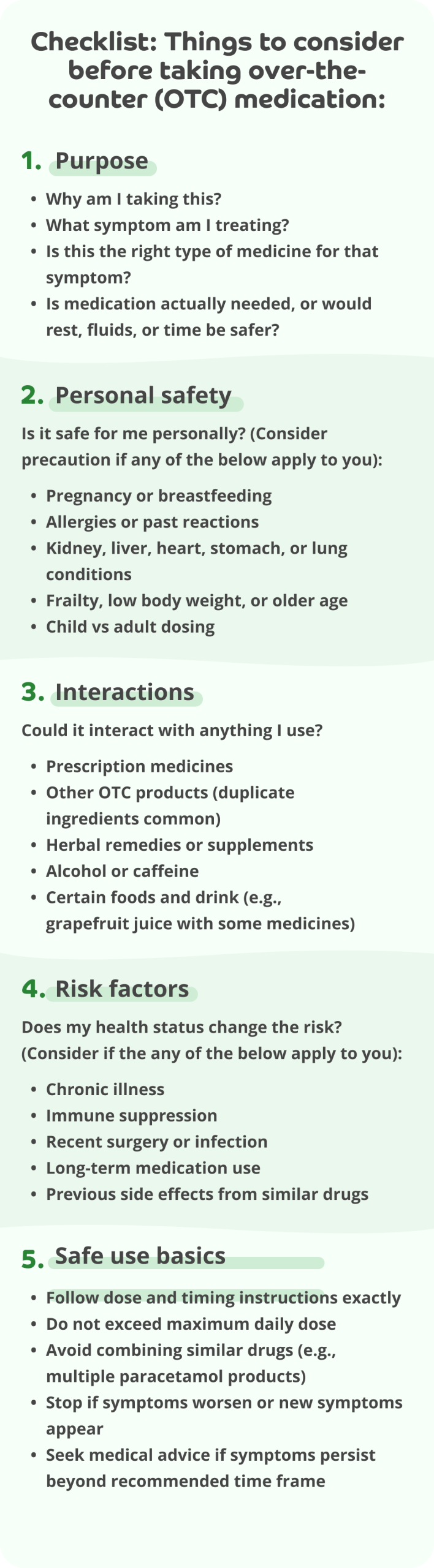
Risks of over the counter medicines: why listing all medicines matters
Identifying interactions in your health record or when using an online tool (such as the BNF interactions checker) can only highlight risks to you and/or your healthcare provider if:
- all medicine is included/shared.
- each OTC product, supplement, and occasional medicine are listed.
- doses and frequency are accurate.
Missing just one OTC medicine can mean a significant interaction is overlooked. OTC medicines should be treated as real medicines, not “extras”.
Recording OTC medicines all in one place that you can access at any time, like in your Evergreen Life Personal Health Record and sharing them in medication reviews helps clinicians:
- spot hidden risks
- adjust treatments safely
- avoid unnecessary harm
- improve long-term condition and medication reviews
Always inform your GP or pharmacist about OTC medicines you’re taking or planning to take during:
- hospital or clinic appointments
- routine medication reviews
- long-term condition checks
- results follow-up appointments
- a new diagnosis of a long term condition
- NHS Health checks
- care navigation discussions
- after stabilisation of acute episodes such as Asthma/COPD flare-ups
- vaccination clinics i.e. flu/covid
- conversations about lifestyle change
Key medication interactions takeaway
Medicine interactions don’t always cause clear symptoms that show straight away, but they can:
– quietly worsen side effects
– limit treatment effectiveness
– create severe risks over time
Treat OTC medicines with the same respect as prescription medicines, and always include them when checking interactions or speaking to your pharmacist or doctor.
Are over the counter medicines safe?
OTC medicines can be helpful – but only when used:
- for the right reason e.g., for the short-term relief of uncomplicated symptoms.
- at the right dose.
- with correct spacing and duration.
- with awareness of interactions and health conditions.
If in doubt, ask a pharmacist or GP, and make sure your OTC medicines are recorded in your personal health record.
Reviewed by:
Dr Claire Marie Thomas MRCGP DFSRH DTMH DipNLP MBChB BMedSci Medical Expert
This article provides general educational information about over-the-counter (OTC) medicines. It is not intended to provide personalised medical advice, diagnosis, or treatment, and should not be used as a substitute for professional healthcare guidance.
OTC medicines can interact with prescription medicines, supplements, food, alcohol, and each other. Their safety and suitability depend on individual factors, such as existing health conditions, other medicines being taken, age, pregnancy, and breastfeeding status.
Always read medicine labels and patient information leaflets carefully. If you are unsure about whether a medicine is appropriate for you, how long to use it, or whether it can be taken alongside other treatments, seek advice from a pharmacist or GP.
If symptoms persist, worsen, or recur, or if you experience unexpected side-effects, seek medical advice. Seek urgent help if you are concerned about a possible overdose (including accidental overdose), severe reactions, or sudden deterioration. In the UK, contact NHS 111 for urgent advice or 999 in an emergency.
OTC medicines, supplements, and occasional treatments should be included in your full medicines list. Recording them in your Evergreen Life Personal Health Record and sharing them during medication or long-term condition reviews helps reduce the risk of interactions and harm.
- Anderson LA (2025) Drug Interactions with Grapefruit Juice.
- Bassotti G and Battaglia E, et al. Considerations for laxatives in terms of their interactions with other drugs. Expert Opinion on Drug Metabolism & Toxicology. 2023 Mar; 19(3). doi: 10.1080/17425255.2023.2193326.
- Bigard M and Pelletier A. Esophageal complications of non-steroidal anti-inflammatory drugs. Gastroentérologie Clinique et Biologique. 2004 Apr; 28 (2): 58-61. doi: 10.1016/S0399-8320(04)95279-7.
- British Liver Trust (2023) Paracetamol overdose and your liver.
- Carter A and Frothingham S (2019) Common Side Effects of Laxatives.
- Cho H, Myung J, Suh HS, et al. Antihistamine use and the risk of injurious falls or fracture in elderly patients: a systematic review and meta-analysis. Osteoporos Int. 2018 Oct; 29(10): 2163-2170. doi: 10.1007/s00198-018-4564-z.
- De Sutter AIM, Saraswat A, van Driel ML. Antihistamines for the common cold. Cochrane Database of Systematic Reviews. 2015 Nov; 11(CD009345). doi: 10.1002/14651858.CD009345.pub2.
- Drugs.com (n.d.) Can You Take Iron Sulfate with Omeprazole?. [Accessed 16/02/2026].
- Drugs.com (n.d.) Can You Take Ketoconazole with Omeprazole?. [Accessed 16/02/2026].
- Drugs.com (n.d.) Lactulose Interactions. [Accessed 24/02/2026].
- GOV.UK (2023) Non-steroidal anti-inflammatory drugs (NSAIDs): potential risks following prolonged use after 20 weeks of pregnancy.
- GOV.UK (2014) Proton pump inhibitors in long-term use: reports of hypomagnesaemia.
- Gray SL, Anderson ML, Dublin S, et al. Cumulative Use of Strong Anticholinergics and Incident Dementia A Prospective Cohort Study. JAMA Intern Med. 2015 Mar; 175(3): 401-407, doi: 10.1001/jamainternmed.2014.7663.
- Guedes JVM, Aquino JA, Castro TLB, et al. Omeprazole use and risk of chronic kidney disease evolution. PLos One. 2020 Mar; 15(3): e0229344. doi: 10.1371/journal.pone.0229344.
- Guts UK (n.d.) Gastritis. [Accessed 17/02/2026]
- Hamano H, Niimura T, Horinouchi Y, et al. Proton pump inhibitors block iron absorption through direct regulation of hepcidin via the aryl hydrocarbon receptor-mediated pathway. Toxicology Letters. 2020 Jan; 318: 86-91. doi: 10.1016/j.toxlet.2019.10.016.
- Kahn MG. Antihistamines. Encyclopedia of Heart Diseases. 2011: 80 doi: 10.1007/978-1-60761-219-3_13.
- Mind (2021) Sleeping pills and minor tranquillisers.
- Nasser SC, Slim M, Nassif JG, et al. Influence of proton pump inhibitors on gastritis diagnosis and pathologic gastric changes. 2015 Apr; 21(15): 4599-4606. doi: 10.3748/wjg.v21.i15.4599.
- NHS (2021) About aspirin for pain relief.
- NHS (2024) About loperamide.
- NHS (2022) About paracetamol for adults.
- NHS (2023) Antihistamines.
- NHS (2025) Clostridioides difficile (C. diff) infection.
- NHS (2022) Considerations Laxatives.
- NHS (2023) Constipation.
- NHS (2021) Gout.
- NHS (2021) How and when to take aspirin for pain.
- NHS (2022) How and when to take codeine.
- NHS (2024) How and when to take loperamide.
- NHS (2022) How and when to take paracetamol for adults.
- NHS (2025) Ibuprofen for adults (Nurofen).
- NHS (2023) Lupus.
- NHS (2022) NSAIDs.
- NHS (2025) Omeprazole.
- NHS (2022) Overview: Laxatives.
- NHS (2022) Pregnancy, breastfeeding and fertility while taking paracetamol for adults.
- NHS (2021) Side effects of aspirin for pain relief.
- NHS (2022) Side effects of codeine.
- NHS (2022) Taking codeine with other medicines and herbal supplements.
- NHS (2025) Taking or using diphenhydramine with other medicines and herbal supplements.
- NHS (2024) Taking loperamide with other medicines and herbal supplements.
- NHS (2022) Taking paracetamol for adults with other medicines and herbal supplements.
- NHS (2021) Who can and cannot take aspirin for pain relief.
- NHS (2022) Who can and cannot take codeine.
- NHS (2024) Who can and cannot take loperamide.
- NHS (2022) Who can and cannot take paracetamol for adults.
- NHS England and Winton Centre for Risk and Evidence Communication (2024) Making a decision about enlarged (big) prostate.
- NHS Hertfordshire and West Essex Integrated Care Board (n.d.) Proton pump inhibitor (PPI) Stopping Or Reducing patient letter. [Accessed 16/02/2026]
- NHS inform (2025) Gastroenteritis.
- NHS 111 online (n.d.) 111 online Check your symptoms.
- NICE (n.d.) Aspirin Interactions. [Accessed 16/02/2026]
- NICE (n.d.) Codeine Interactions. [Accessed 16/02/2026]
- NICE (n.d.) Fexofenadine. [Accessed 16/02/2026]
- NICE (n.d.) Grapefruit Interactions. [Accessed 18/02/2026]
- NICE (n.d.) Ibuprofen Interactions. [Accessed 16/02/2026]
- NICE (n.d.) Interactions A to Z. [Accessed 17/02/2026].
- NICE (n.d.) Loperamide Interactions. [Accessed 17/02/2026]
- NICE (n.d.) Loratadine. [Accesed 16/02/2026]
- NICE (n.d.) Omeprazole Interactions. [Accessed 16/02/2026]
- NICE (n.d.) Paracetamol Interactions. [Accessed 16/02/2026]
- Ruschitzka F, Borer JS, Krum H, et al. Differential blood pressure effects of ibuprofen, naproxen, and celecoxib in patients with arthritis: the PRECISION-ABPM (Prospective Randomized Evaluation of Celecoxib Integrated Safety Versus Ibuprofen or Naproxen Ambulatory Blood Pressure Measurement) Trial. Eur Heart J. 2017 Aug; 38(44): 3282-3292. doi: 10.1093/eurheartj/ehx508.
- Schroeck JL, Ford J, Conway EL, et al. Review of Safety and Efficacy of Sleep Medicines in Older Adults. Clinical Therapeutics. 2016 Nov; 38(11: 2340-2372. doi: 10.1016/j.clinthera.2016.09.010.
- Schumacher J, Mϋller P, Sulzer J, et al. Proton-pump inhibitors increase C. difficile infection risk by altering pH rather than by affecting the gut microbiome based on a bioreactor model. Gut Microbes. 2025 Jun; 17(1): 2519697. doi: 10.1080/19490976.2025.2519697.
- Shanika LGT, Reynolds A, Pattison S, et al. Proton pump inhibitor use: systematic review of global trends and practices. European Journal of Clinical Pharmacology. 2023 Jul; 79: 1159-1172. doi: 10.1007/s00228-023-03534-z.
- The Glaucoma Foundation (2022) It’s Allergy Season.
- Wang LS, Zhou G, Zhu B. St John’s wort induces both cytochrome P450 3A4-catalyzed sulfoxidation and 2C19-dependent hydroxylation of omeprazole. Clin Pharmacol Ther. 2004 Mar; 75(3): 191-7. doi: 10.1016/j.clpt.2003.09.014.